
ACE Hive Commercial Property Growth Investment
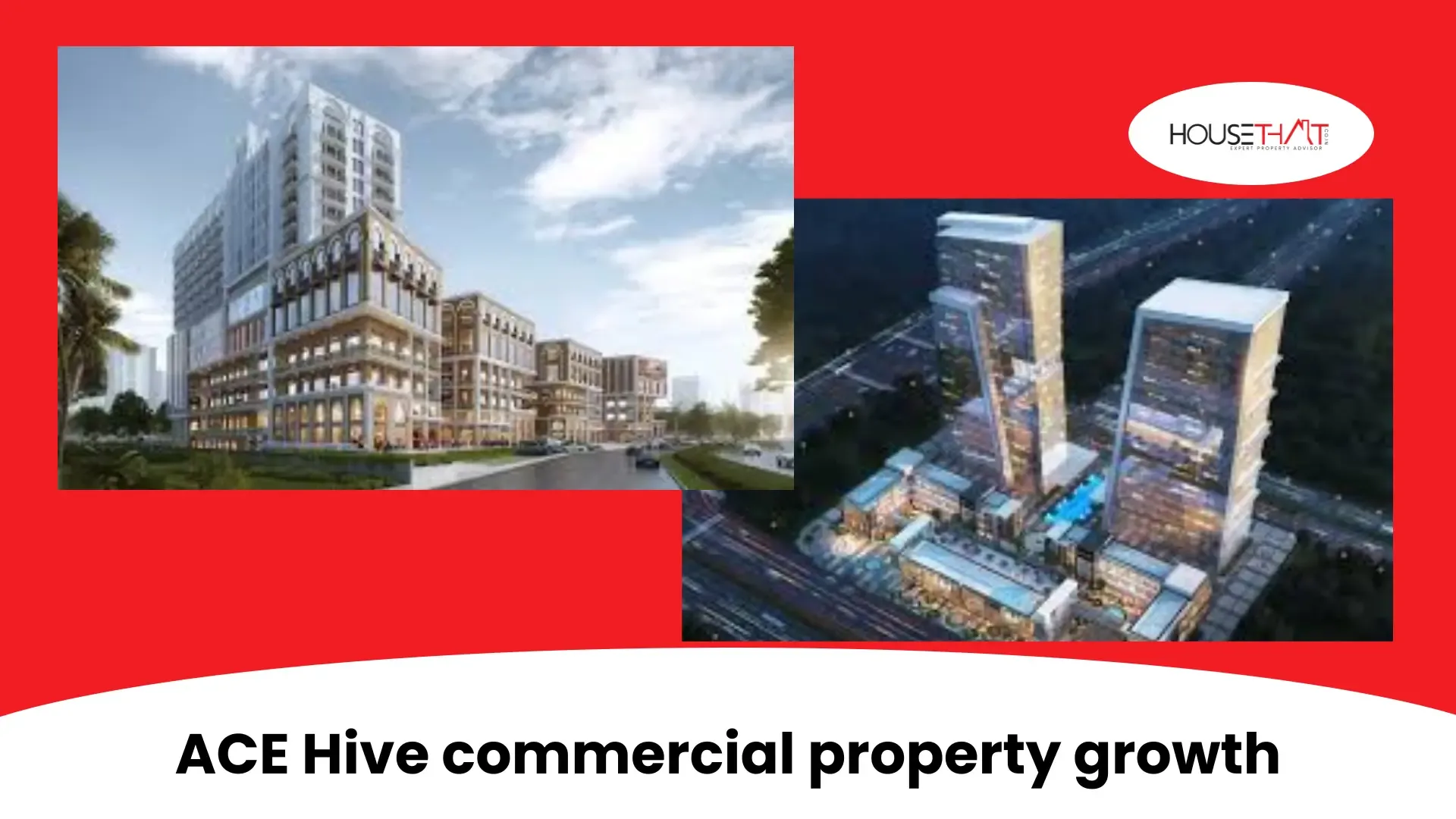
ACE Hive Commercial Property Growth Investment
ACE Hive commercial property growth represents one of the most compelling narratives in India’s emerging retail and mixed-use commercial real estate sector. Located in Greater Noida West and backed by strategic connectivity improvements, increasing population density, evolving consumption patterns, and organized retail demand, ACE Hive is positioned as a high-potential commercial investment destination. This article explores the drivers behind ACE Hive commercial property growth, including infrastructure expansion, demographic momentum, developer credibility, rental yield potential, and long-term capital appreciation prospects.
Introduction: Understanding the Momentum Behind ACE Hive Commercial Property Growth
Over the last decade, India’s commercial real estate market has undergone a structural transformation. The rise of integrated townships, mixed-use developments, transit-oriented corridors, and organized retail ecosystems has reshaped how investors evaluate opportunities. Within this evolving landscape, Greater Noida West—also known as Noida Extension—has emerged as one of the fastest-growing micro-markets in the National Capital Region (NCR). At the center of this transformation lies ACE Hive, a strategically positioned commercial development that reflects the broader trajectory of regional economic expansion.
ACE Hive commercial property growth is not accidental. It is the result of carefully aligned macroeconomic conditions, infrastructure investments, developer execution capability, and rapidly expanding consumer catchments. As residential occupancy rises across Greater Noida West, demand for structured retail spaces, food courts, office studios, service outlets, and lifestyle experiences continues to accelerate.
For investors seeking stable rental income combined with long-term capital appreciation, ACE Hive represents a case study in how emerging commercial nodes transition into mature retail destinations.
Greater Noida West: The Foundation Supporting ACE Hive Commercial Property Growth
To understand the trajectory of ACE Hive commercial property growth, it is essential to evaluate the transformation of Greater Noida West as a residential and commercial ecosystem.
Once perceived primarily as an affordable housing corridor, the region has now evolved into a high-density urban extension supporting middle-income professionals, IT employees, startup founders, and service-sector workers. This demographic shift has created sustained demand for structured retail infrastructure.
Key growth drivers include:
Expansion of residential societies with high occupancy levels
Improved road connectivity with Noida, Ghaziabad, and Delhi
Metro extension proposals enhancing transit accessibility
Increasing presence of schools, hospitals, and daily-use retail networks
Rising disposable income among working families
These structural developments directly contribute to ACE Hive commercial property growth by ensuring a stable and expanding consumer base within immediate reach.
Strategic Location Advantage of ACE Hive
Location plays a defining role in determining the performance of any commercial property. ACE Hive benefits from placement along a high-footfall corridor surrounded by dense residential catchments and developing institutional infrastructure.
The project enjoys proximity to:
Major residential societies in Greater Noida West
Educational institutions
Healthcare centers
Upcoming transit connectivity corridors
Key arterial roads linking Noida and Delhi
Because organized retail penetration historically lagged behind residential expansion in the region, developments like ACE Hive now occupy a first-mover advantage position. This positioning significantly strengthens ACE Hive commercial property growth potential over the medium and long term.
Developer Reputation and Execution Strength
Another important factor supporting ACE Hive commercial property growth is the credibility of the developer behind the project.
ACE Group has consistently delivered residential and commercial projects recognized for architectural planning, timely construction progress, and quality finishing standards. In commercial real estate, developer reputation influences tenant confidence, investor participation, and financing accessibility.
Investors evaluating ACE Hive commercial property growth frequently cite the following developer strengths:
Proven execution capability
Consistent construction momentum
Brand recognition across NCR markets
Transparent sales structure
Investor-friendly payment frameworks
A reliable developer ecosystem reduces risk exposure while improving occupancy timelines, which directly supports faster rental stabilization.
Retail Evolution in Tier-2 Urban Extensions and Its Role in ACE Hive Commercial Property Growth
Retail consumption patterns across India are shifting rapidly. As urban expansion pushes beyond traditional city cores, organized retail infrastructure must follow residential migration patterns.
Greater Noida West illustrates this phenomenon clearly.
Instead of traveling long distances for lifestyle experiences, residents increasingly prefer nearby destinations offering:
Dining experiences
Branded retail outlets
Entertainment zones
Service providers
Wellness centers
ACE Hive commercial property growth benefits from this localized retail preference shift. Neighborhood retail hubs now command strong tenant demand because they serve both convenience shoppers and destination visitors.
This hybrid demand profile enhances long-term sustainability for commercial assets within integrated residential corridors.
Catchment Density: A Core Driver of ACE Hive Commercial Property Growth
Footfall determines commercial viability.
Greater Noida West continues to witness rapid occupancy growth across residential towers delivered during the last five years. Thousands of families now live within a short driving distance of ACE Hive.
High-density residential catchments support:
Grocery anchors
Cafes
Pharmacies
Clinics
Salon chains
Fitness studios
Co-working studios
As daily-use demand stabilizes early-stage occupancy, premium lifestyle tenants typically follow in later phases. This sequential tenant layering strengthens ACE Hive commercial property growth across development cycles.
Infrastructure Expansion as a Catalyst for ACE Hive Commercial Property Growth
Infrastructure investment remains one of the strongest predictors of commercial real estate appreciation in NCR markets.
Greater Noida West continues to benefit from multiple connectivity upgrades including road widening projects, transit proposals, and regional mobility improvements linking the area to employment hubs.
Infrastructure-led appreciation influences:
investor confidence
tenant migration
corporate expansion interest
hospitality penetration
retail brand entry timing
Each improvement compounds the investment narrative supporting ACE Hive commercial property growth.
Organized Retail Demand and Leasing Momentum
Retail brands increasingly prioritize structured commercial environments over standalone high-street properties due to operational efficiency and customer experience consistency.
ACE Hive commercial property growth reflects this trend.
Retail operators typically evaluate locations based on:
demographic strength
accessibility
visibility
parking availability
vertical zoning
anchor tenant presence
ACE Hive’s planning framework aligns with these expectations, strengthening leasing attractiveness for national and regional brands.
Studio Offices and Hybrid Workspaces Supporting ACE Hive Commercial Property Growth
The rise of flexible work culture has created demand for compact office formats located near residential zones.
Studio office spaces within mixed-use developments attract:
consultants
freelancers
startup teams
digital professionals
boutique agencies
This shift strengthens weekday occupancy within commercial hubs previously dominated by evening retail footfall.
As studio office adoption increases, ACE Hive commercial property growth benefits from diversified tenant categories rather than relying solely on retail demand.
Food and Beverage Ecosystems Driving Evening Footfall
Restaurants and cafes play a critical role in activating commercial real estate destinations.
ACE Hive commercial property growth is supported by the expanding dining culture within Greater Noida West’s young professional population.
Food-driven footfall contributes to:
longer visitor dwell time
higher weekend activity
cross-category retail spending
improved visibility for new brands
Because dining anchors often act as destination drivers, they significantly enhance long-term commercial ecosystem resilience.
Investment Yield Potential and Rental Income Expectations
Rental yield remains one of the primary evaluation metrics for commercial investors.
ACE Hive commercial property growth projections are closely linked with expected rental stabilization timelines once the surrounding catchment reaches maturity.
Commercial units positioned within high-density residential corridors typically achieve:
faster tenant onboarding
stronger lease renewals
stable occupancy ratios
incremental rental escalation cycles
Investors entering early phases of development often benefit from pre-stabilization pricing advantages.
Capital Appreciation Drivers Supporting ACE Hive Commercial Property Growth
Capital appreciation in commercial real estate depends on multiple structural variables working together over time.
Key appreciation catalysts include:
population growth within immediate catchment
infrastructure upgrades
brand tenant entry
improved accessibility
developer-led maintenance standards
ACE Hive commercial property growth reflects alignment across these appreciation indicators.
Mixed-Use Development Strategy and Its Role in Long-Term Value Creation
Mixed-use commercial ecosystems outperform single-use developments in emerging urban corridors.
ACE Hive integrates retail, studio office formats, and service-based tenancy potential within one structured environment. This diversification improves investment stability across market cycles.
Multiple usage formats create:
multi-time-zone activity
diversified tenant mix
balanced revenue streams
resilient occupancy patterns
These characteristics collectively strengthen ACE Hive commercial property growth over long-term holding periods.
Parking Infrastructure and Visitor Accessibility
Parking availability significantly influences visitor conversion rates within commercial developments.
ACE Hive’s structured parking framework enhances accessibility convenience, encouraging repeat visits and improving tenant retention probability.
Ease of access remains one of the strongest predictors of sustained commercial success.
This operational advantage supports consistent ACE Hive commercial property growth across leasing cycles.
Competitive Positioning Within Greater Noida West’s Commercial Landscape
Although several commercial developments exist within Greater Noida West, structured retail ecosystems remain limited relative to residential population density.
ACE Hive commercial property growth benefits from this supply-demand imbalance.
Early-stage commercial nodes often capture disproportionate tenant interest due to limited organized alternatives within walking-distance catchments.
This positioning strengthens long-term occupancy resilience.
Investor Psychology and Early Entry Advantage
Commercial real estate investors frequently prioritize emerging corridors before infrastructure maturity reaches its peak.
ACE Hive commercial property growth represents a textbook example of early-entry opportunity supported by demographic expansion and connectivity upgrades already underway.
Early investors typically benefit from:
lower entry pricing
stronger appreciation cycles
priority unit selection
improved leasing flexibility
Timing plays a decisive role in maximizing returns within expanding commercial micro-markets.
Long-Term Urbanization Trends Supporting ACE Hive Commercial Property Growth
Urban decentralization remains one of the defining themes shaping NCR expansion patterns.
Employment hubs are no longer restricted to traditional CBD zones. Instead, residential-driven commercial ecosystems now define future retail infrastructure strategy.
Greater Noida West represents a clear example of this transformation.
ACE Hive commercial property growth aligns with these macro-urbanization patterns.
Consumer Behavior Transformation and Neighborhood Retail Demand
Consumers increasingly prefer proximity-based retail experiences rather than destination-only shopping centers.
Neighborhood commercial hubs now support daily-use services combined with lifestyle experiences.
ACE Hive commercial property growth benefits from this behavioral shift by serving both convenience shoppers and weekend visitors.
This dual-demand model strengthens tenant sustainability across economic cycles.
Leasing Ecosystem Sustainability and Tenant Retention Potential
Commercial developments succeed when tenant retention remains strong across lease renewal cycles.
ACE Hive commercial property growth is supported by diversified tenant demand across service categories including wellness, diagnostics, food outlets, retail stores, and workspace operators.
Tenant diversification reduces reliance on single-category occupancy performance.
This improves long-term investment predictability.
Institutional Infrastructure Supporting Commercial Ecosystem Expansion
Schools, hospitals, and training institutes significantly influence neighborhood retail performance.
Greater Noida West continues to witness steady institutional infrastructure growth supporting long-term residential stability.
Stable residential ecosystems directly strengthen ACE Hive commercial property growth by ensuring recurring consumer traffic across weekdays and weekends.
Risk Mitigation Factors Investors Should Evaluate
Every commercial investment decision requires structured risk evaluation.
Investors analyzing ACE Hive commercial property growth typically review:
developer track record
catchment occupancy levels
infrastructure timelines
leasing velocity indicators
competing commercial supply pipeline
Balanced evaluation improves investment confidence and return predictability.
Future Outlook: Why ACE Hive Commercial Property Growth Remains a Strong Investment Narrative
Commercial real estate success depends on alignment between infrastructure readiness, residential density, accessibility, and developer execution capability.
ACE Hive commercial property growth reflects convergence across all these variables.
As Greater Noida West transitions from an emerging corridor to a mature residential-commercial ecosystem, structured retail environments like ACE Hive are expected to play a central role in supporting neighborhood consumption demand.
For investors seeking rental yield potential combined with long-term appreciation prospects, ACE Hive continues to represent a strategically positioned commercial destination within NCR’s expanding urban footprint.
Conclusion: Evaluating the Strategic Value of ACE Hive Commercial Property Growth
ACE Hive commercial property growth represents more than a localized commercial opportunity. It reflects a broader structural transition underway across India’s expanding urban extensions where residential density is now shaping retail infrastructure investment priorities.
Supported by infrastructure expansion, catchment population growth, evolving consumption behavior, developer credibility, and mixed-use planning advantages, ACE Hive continues to strengthen its position within Greater Noida West’s commercial real estate narrative.
Investors who evaluate early-stage commercial ecosystems supported by strong demographic fundamentals often benefit from both rental stabilization momentum and long-term appreciation cycles.
Within this framework, ACE Hive commercial property growth stands out as a strategically aligned opportunity positioned at the intersection of infrastructure readiness, retail demand expansion, and neighborhood-level economic transformation.
FAQs
Que: What factors are driving ACE Hive commercial property growth?
Ans: ACE Hive commercial property growth is primarily driven by increasing residential density in Greater Noida West, improving road connectivity, planned metro expansion, rising demand for organized retail spaces, and strong developer credibility. These factors collectively support higher footfall potential, tenant demand, and long-term appreciation prospects.
Que: Is ACE Hive a good investment for rental income?
Ans: Yes, ACE Hive is considered a promising option for rental income because it is located in a high-population catchment area with growing demand for neighborhood retail, studio offices, cafés, and service outlets. As occupancy in surrounding residential societies increases, leasing activity is expected to strengthen further.
Que: How does location influence ACE Hive commercial property growth?
Ans: Location plays a critical role in ACE Hive commercial property growth. The project benefits from proximity to dense residential clusters, institutional infrastructure, and upcoming connectivity upgrades linking Greater Noida West with Noida and Delhi, which enhances accessibility and tenant interest.
Que: What types of commercial spaces are available in ACE Hive?
Ans: ACE Hive offers a mix of retail shops, food and beverage outlets, studio offices, and service-based commercial units. This mixed-use configuration supports diversified tenant categories and contributes to stronger long-term occupancy sustainability.
Que: What is the future outlook for ACE Hive commercial property growth?
Ans: The future outlook for ACE Hive commercial property growth remains positive due to expanding infrastructure development, increasing consumer demand within Greater Noida West, and the shift toward organized neighborhood retail ecosystems. These trends support both rental yield stability and capital appreciation potential over time.