
What Is the Future of Noida, Greater Noida and the Yamuna Expressway?
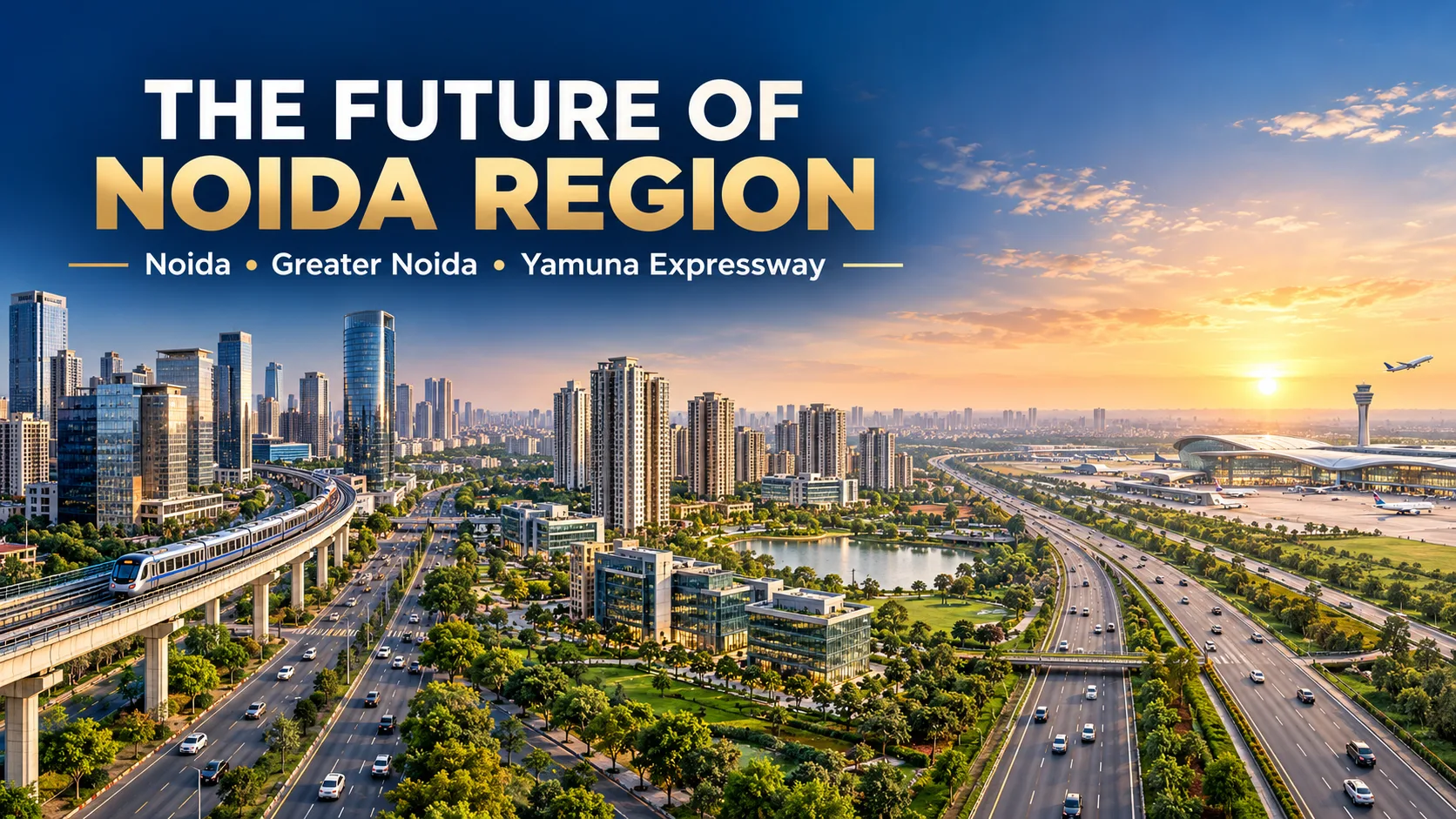
What Is the Future of Noida, Greater Noida and the Yamuna Expressway?
Explore the future of Noida, Greater Noida and the Yamuna Expressway, including infrastructure growth, Jewar Airport, property price trends and real estate investment opportunities.
What Is the Future of Noida, Greater Noida and the Yamuna Expressway?
Noida, Greater Noida and the Yamuna Expressway corridor are developing as connected but distinct parts of the wider NCR. Noida has an established base of offices, housing and civic infrastructure. Greater Noida continues to expand through residential, institutional and industrial development. Along the Yamuna Expressway, the new airport and planned economic activity are bringing more attention to a region that is still taking shape.
The outlook is promising, but it will not be the same everywhere. Long-term growth will depend on how well infrastructure, jobs, public transport, social facilities and housing supply develop together. Buyers and investors should look at each location separately instead of assuming that one project will lift every property market in the region.
Noida: a mature city adapting for its next phase
Noida’s future is closely linked to its existing strengths: established residential sectors, commercial and office areas, road connections and access to Delhi and other NCR cities. As the city grows, the next phase is likely to include upgrades to public transport, road networks, civic services and commercial districts, alongside redevelopment and new projects where land is available.
For homebuyers, an established location can offer access to schools, healthcare, markets and workplaces that are already operating. But established does not automatically mean that every sector or society is convenient. Traffic, building age, maintenance, parking and the distance to public transport can vary significantly from one property to another.
New infrastructure may also improve regional access. For example, the approved Noida Metro extension corridor from Sector 142 to Botanical Garden is intended to add an interchange with the Blue and Magenta lines when it becomes operational. It is an approved project, not a service that passengers can use today. Buyers should distinguish between a proposed, approved, under-construction or operational project when assessing a location.
Greater Noida: growth shaped by housing, education and industry
Greater Noida has room for planned development across residential, institutional, industrial and commercial uses. The city’s long-term potential depends on whether employment centres grow alongside housing. A larger supply of apartments can attract residents, but sustainable demand also needs jobs, transport, schools, healthcare, retail and dependable civic services.
Greater Noida West, often called Noida Extension, has attracted buyers looking for a wide range of apartment sizes and residential communities. The area’s connectivity is still an important factor for residents, many of whom rely on roads for daily travel. A proposed metro corridor linking Noida Sector 51 with Greater Noida West was reported to be awaiting further approvals and tendering steps in September 2026. Until operations begin, buyers should plan their commute using the transport options available today.
Greater Noida’s established sectors and newer residential pockets can suit different kinds of buyers. Some may prioritise a ready-to-move home near existing facilities; others may prefer a larger apartment in a newer society. Project quality, legal status and daily accessibility matter more than a broad city-level growth story.
Yamuna Expressway: airport-led development is the key catalyst
The Yamuna Expressway corridor is gaining visibility through the Noida International Airport at Jewar. Commercial flight operations began on 15 June 2026. The airport’s first phase is designed for an annual capacity of 12 million passengers, with a larger capacity planned through later development phases. Its operator has also described cargo, warehousing and logistics as part of the airport’s broader role.
This creates the potential for activity in aviation services, cargo handling, transport, hospitality, retail and supporting businesses. If these sectors expand, they can create jobs and increase demand for housing and commercial space. The scale and pace of that impact will depend on actual business activity, flight growth, transport links and the delivery of supporting infrastructure.
Airport proximity alone does not guarantee that every nearby plot or apartment will rise in value. Some locations may benefit more directly from access roads or employment hubs, while others may remain less connected to daily services. Buyers should verify the exact route, land use, project approvals, utilities and possession status before relying on an “airport corridor” label.
How the three markets may connect
These locations may increasingly function as parts of a broader NCR network. Noida can continue to serve as an established residential and business centre. Greater Noida can absorb additional housing, institutional and industrial activity. The Yamuna Expressway corridor can grow around the airport and other planned economic uses.
Better transport links could make it easier for people to live in one part of the region and work or travel through another. The benefit will depend on reliable connections and manageable travel times, not only on a line drawn on a master plan. Feeder transport, road access, public services and the location of jobs will all influence whether an area becomes practical for end-users.
In October 2026, plans were reported for a proposed “New Noida” development covering around 20,000 hectares, with development expected in phases. This is a long-term planning proposal, not a ready-made residential market. Buyers should follow official land-use plans, acquisition notices and authority updates before evaluating specific sites connected with the proposal.
What could shape property demand?
Several factors will influence future demand across the region:
- Employment: Offices, industry, logistics and airport-related businesses can support both home buying and rental demand when they create sustained jobs.
- Transport: Operational metro, road and bus links can improve daily access. Proposed infrastructure may add future potential, but its timeline and final route should be verified.
- Liveability: Schools, hospitals, shops, parks, water supply, drainage and waste services help turn a developing location into a functional neighbourhood.
- Housing supply: A large number of launches can give buyers more choice, while also creating competition among projects and resale homes.
- Project execution: Construction progress, approvals, delivery record and society management can affect the value of an individual property more than the wider location narrative.
Risks buyers should keep in view
Infrastructure-led property markets can attract speculative pricing. A future road, metro line or business district may take years to complete, and project plans can change. Do not base a purchase solely on projected appreciation or a promised completion date for nearby infrastructure.
Market activity can also slow even when a city has a strong long-term story. A report published in October 2026 said Noida housing demand fell year-on-year in Q3 2026. This is a reminder that property demand moves in cycles and that broad infrastructure investment does not eliminate affordability, supply or financing risks.
Before booking, verify the project’s RERA details, approvals, land or lease documents, construction status, payment schedule and possession terms. For plots, check ownership, approved land use, access rights, utilities and the relevant authority’s records. Compare total cost and actual travel time across multiple locations.
Conclusion: long-term potential, with different timelines
Noida, Greater Noida and the Yamuna Expressway each have a different development profile. Noida offers an established urban base; Greater Noida has room for continued residential and employment growth; and the Yamuna Expressway corridor is moving into a new phase after the airport began commercial operations.
The region’s future will depend on whether infrastructure is delivered, businesses create lasting employment and neighbourhood services keep pace with population growth. For buyers, the practical approach is to match a property to current needs, verify its documents and treat future development as a possible advantage—not a guaranteed return.
Frequently Asked Questions
1. Which area has the strongest future potential?
Each has a different role. Noida is established, Greater Noida has expansion capacity, and the Yamuna Expressway is developing around the airport. Project-level checks are essential.
2. Is the Noida International Airport operational?
Yes. Commercial flight operations began on 15 June 2026. Check the airport’s official website for current routes and passenger information.
3. Will the airport increase all property prices nearby?
Not automatically. Impact can vary by access, jobs, services, project supply and actual buyer demand.
4. Is Greater Noida West metro operational?
As of the latest reports cited here, the proposed corridor was still progressing through approval and tendering steps. Verify its status before buying.
5. What is New Noida?
It is a proposed phased development plan. Buyers should consult official land-use and authority updates before considering any specific parcel.
6. Is the Yamuna Expressway suitable for end-users?
It may suit buyers whose work, travel and daily needs align with the area. Visit the location and check existing services, commute and possession status.
7. What should I check before investing?
Verify title, RERA details where applicable, approvals, land use, construction status, total cost and realistic resale or rental demand.
8. Are appreciation forecasts guaranteed?
No. Forecasts are estimates, not assured returns. Property values can rise, remain flat or fall depending on market and project conditions.